Join Our Family
My Account
Molly Brave logo
  • Home
  • About Us
  • Store
  • Blog
  • Activities
  • Contact
  • Blog

    • All Categories
    • For Parents and Teachers
    • Recommended Books
    • Resources
    • News
    • Mentorship With Mary Alice – An Introduction
      • How To Begin Writing For Children
    • Independent, Hybrid and Self-Publishing

Blog

Resources

Rules of Paying Yourself for the Startup Owner, Freelancer & Self-Employed

Published on June 18, 2017 | In Blog, Resources | 0 Comment

from Website Magazine, a free resource

Corey Bray
Posted on 6.16.2017
 

Congratulations! If you are reading this, you are thinking about or have already made the leap into forming your own business. It can be a scary time, with many things to consider and major decisions to be made.

One of the biggest things to consider is how you are going to pay yourself. After all, the major reason that we work is to pay for life.

Rule 1: How You Pay Yourself Matters

Paying yourself in a sole proprietorship looks very different compared to paying yourself as the owner of a corporation or LLC. There are multiple factors to consider, and each one has different tax and legal ramifications. With most structures, you need to be able to show the IRS or state tax entities how much you are earning and how you are earning it. That means that you not only need to pay yourself in a specific way, but you may also need to use documentation to prove payments.

If you are using a corporate or LLC structure, keeping the business assets separate from your personal funds is extremely important to maintain the limited liability of the business entity. Transferring funds back and forth between yourself and the business bank account frequently can undermine these protections.

Rule 2: Reasonable Compensation Should Be Determined Through Research and Careful Thought

The IRS requires that businesses, like an LLCs and other corporations, pay corporate officers and owners “reasonable compensation.” However, It can be tough to determine what reasonable compensation may be for your role in your own business. If you pay yourself too much, you are taking money out of the company that could have been used for growth, expansion or even everyday purchases. On the other hand, if you pay yourself too little, you may not be able to get by on a daily basis.

Another factor to consider is that if you are underpaying yourself, the IRS may adjust your reportable income to reflect how much you should be paid based on your title and role in the business. They do this to avoid situations where business owners do not take enough compensation to avoid paying income taxes. Failing to pay required taxes can result in significant penalties and interest.  

Here are some of the ways you can determine what reasonable compensation is:

  • Comparable salaries of other individuals in your industry

  • Duties you are performing as part of your position

  • How much time and effort you are investing into your

  • Your level of responsibility within the company

  • Whether your pay is directly related to the hours worked and your pay compared to other employees’ wages at your business.

Rule 3: Sole Proprietors and Partnerships Do Not Have Salaries

With the majority of gig and freelance workers working on their own, many are choosing to structure their business and payments as a sole proprietor or partnership. With these types of structures, you do not pay yourself a salary, which means there are no payroll taxes deducted from your payments to yourself. Business owners who operate a sole proprietorship have the most leeway when it comes to paying themselves. As a sole proprietor, you can literally take draws whenever you want, for any amount that you want, with no oversight.

Payments to Social Security, Medicare, and state and federal income tax authorities are obviously not paid in the payments you make to yourself in a sole proprietorship or partnership. Instead, you must track all of the payments you make to yourself and pay self-employment taxes on them at the end of the year. For 2017, the self-employment tax rate is 15.3 percent.

Most self-employed individuals who operate under a partnership or sole proprietorship will make quarterly tax payments (often referred to as “estimated tax payments”) to the IRS and state taxing authorities. This requires setting aside a portion of your income to make these payments.

What structure works best for you? Tell us in the comments!

About the Author
Corey Bray is the CEO and Founder of LegalNature. A serial entrepreneur, Corey has successfully exited several startups and is currently focused on revolutionizing the business document industry.

 

Leave A Message

Text This Number to Find Free Summer Meals for Hungry Kids

Published on June 6, 2017 | In Blog, For Parents and Teachers, Resources | 0 Comment

By Evie Blad on June 6, 2017 3:27 PM

A quick text message can help families locate nearby federally supported summer meals sites, which are designed to meet the nutritional needs of children who rely on school lunches and breakfasts during the school year.

Text "food" or "comida" to 877-877 and you will receive a prompt to reply with your address or zip code. The service then pulls active summer-meal sites from a U.S. Department of Agriculture database and sends you a list of nearby locations.

"Last year only about 16% of the kids who rely on free/reduced meals during the school year were getting meals in the summer," No Kid Hungry says in a release. "One major obstacle: Many families either don't know the program exists or don't know how to find sites."

Summer meal programs, hosted by schools and approved non-profit organizations, offer free meals to children in areas where 50 percent or more of students qualify for free or reduced-price lunches. In some cases, those meals are offered from trucks and buses that go into low-income neighborhoods where children may lack transportation to meals sites.

Photo: Nicohles, Destiny, and Desiree Kleis, from left, ate lunch inside the lunch bus, a free summer meal program in Pasco County, Fla. in 2014. A growing number of school districts are creating mobile meals programs to keep children well-fed over the summer. --Melissa Lyttle for Education Week

Read the entire article here

Leave A Message

LibreStock: free source for high-quality stock photos

Published on June 4, 2017 | In Blog, Resources | 0 Comment


Tip of the Month from Sandra Beckwith

selling more books 3I always share a “Tip of the Month,” a free resource or tool for authors, on the last Wednesday of the month.

Most of you who blog know by now that it’s important to use high-quality images in your posts. There are several reasons for this, but the primary one is that images make your posts more visually appealing.

My favorite source of paid images recently changes its terms, which sent me looking for an alternative source of images. While looking for paid image sources, I stumbled upon an excellent free source: LibreStock.

LibreStock is a search engine that scans and indexes stock photos from more than 40 websites. Type in your search term and get free. high-quality. stock photos.

All the photos indexed on LibreStock are licensed under the Creative Commons Zero (CC0) license, which means you can use these pictures freely for any legal purpose.

Learn more at the LibreStock site.

More tips from Sandra Beckwith can be found here:  “Build Book Buzz” e-mail newsletter

Leave A Message

Live Children’s Book Illustration on Facebook Live

Published on May 1, 2017 | In Blog, For Parents and Teachers, News, Resources | 0 Comment

Monika Edinger's "educating alice" blog of March 6 brings us up to date.

There is a cool new feature on Facebook Live, from the New York Times Book Review — Children’s Live Illustration.

Visual artists have always had an important place in children’s literature. Watch some leading children’s books illustrators draw, paint, collage, and talk about books with The Times’ children’s books editor, Maria Russo.

It started January 6th with Christian Robinson and went on, as of this writing, with the following (for the ones without links the videos are all here):

  • Matthew Reinhart
  • Booki Vivat
  • Joe Sutphin
  • Jon Klassen
  • Mark Siegel
  • Jerry Pinkney
  • Patrick McDonnell
  • Grant Shaffer
  • Abby Hanlon
  • Sophie Blackall
  • George O’Connor
  • Elise Gravel
  • Nick Bruel
  • Javaka Steptoe
  • Vanessa Brantley Newton
  • Floyd Cooper
  • James Sturm

Leave A Message

HOMEWORK HELP from National Geographic Kids – Nice!

Published on April 29, 2017 | In Blog, For Parents and Teachers, Resources | 0 Comment

We've got the homework help tools you need to succeed!

From animal and country profiles on Nat Geo Kids to encyclopedia entries and maps on Nat Geo Education, here's where you'll find what you need to ace your assignments.

Educators: Visit NatGeoEd.org for lesson plans and classroom activities.


Leave A Message

Reclaimed Book Boards for DIY Hardcover Books [VIDEO]

Published on April 27, 2017 | In Blog, Resources | 0 Comment

from Andrew Seltz
The Go-To Guy!
www.DIYBookbinding.com


Book Board (aka Binder’s Board) can get expensive. Archival quality supplies can cost as much as $5 US per board. But, you probably have access to a large supply that will cost you nothing more than a little time – used books!

In my town there are several places that sell second hand merchandise. They always have a bin outside with free books, and there is often a hardcover book or two in there. There are also thrift stores and yard sales loaded with books as well. These books are often one step away from the recycling bin and with a little effort you can give them a new life in your hand crafted books.

If the thought of hurting a book pains you, remember, there are lots of books that aren’t valuable works of literature (or art.) There are loads of outdated reference books, business books, and others that are made from quality materials but have outlived their usefulness. Reclaiming materials from them gives them new purpose and adds character to your book projects.

In this video I show you how I salvage cover boards, head bands, and tail bands from a commercial hardcover book. The process will also give you a good look at how the hardcover books you find at your local bookstore are constructed.

Leave A Message

Zero To Three: Child Abuse Prevention and many more resources

Published on April 25, 2017 | In Blog, For Parents and Teachers, Resources | 0 Comment

I’d like to share with you some of the work ZERO TO THREE does to address the needs of abused and neglected infants and toddlers across the country. With your support, we are helping to transform the experiences of infants, toddlers, and families in the child welfare system.

The Safe Babies Court Teams approach increases knowledge among all those who work with maltreated children about the needs of infants and toddlers and how to work with each child and parent. Together, we design tailored services to address the root causes of abuse and neglect and heal the parent-baby bond. by Matthew Melmed

"What I got from the Safe Babies Court Team was a room full of people asking what they could do to help me, what my strengths were, and how we could build on those. We agreed on a plan that my son would stay with my sister, how often I could see him, and we started taking action for me to get back on track and for my son to be returned to my care as soon as I could show them that I was willing to do the work."

- A mother who participated in our infant-toddler court team

Read more here

  • Services
    • Professional Development
    • Early Childhood Workforce Innovations
    • Technical Assistance
    • HealthySteps
    • Leadership Development Institute
    • Safe Babies Court Teams
    • Text4baby
  • Resources
    • Featured Resources
    • Member-Exclusive Resources
    • The Bookstore
    • ZERO TO THREE Journal
    • Parent Favorites
    • Newsletters
    • Policymakers & Advocates
    • Virtual Events
    • CERO A TRES: Recursos en español
    • State-Based Resources
  • Trending for Professionals
    • Annual Conference 2017 - Registration Opens May 9!
    • DC:0–5 Training Now Available - Book Yours Today
    • Member Benefits Available - Find Out More!
    • New! Critical Competencies for Educators - Buy eBook
    • Magic of Everyday Moments - Now with STEM
  • Browse by Type
    • Everything
    • Advocacy Tools
    • Parenting Resources
    • Policy Resources
    • Professional Resources
    • Workforce Development

Leave A Message

Book excerpt: Wired to Create

Published on April 22, 2017 | In Blog, Resources | 0 Comment

Recommended in Quiet Revolution by Susan Cain, bestselling author of Quiet: The Power of Introverts in a World That Can't Stop Talking. 

In Wired to Create: Unraveling the Mysteries of the Creative Mind, authors Scott Barry Kaufman and Carolyn Gregoire explore ten attributes and habits of highly creative people: imaginative play, passion, daydreaming, solitude, intuition, openness to experience, mindfulness, sensitivity, turning adversity into advantage, and thinking differently. And if you’re an introvert, #4 probably perked your ears right up. It turns out what we suspected all along is true—creativity needs solitude like Abbott needs Costello. The following excerpt discusses how “a room of one’s own” is a critical component of the creative process.

Alone but not lonely

Science has now reinforced what the work habits of countless artists have demonstrated: Time for solitary reflection truly feeds the creative mind. The capacity for solitude is a quality that unites successful creators, who are able to turn away from the distractions of daily life and social interactions to reconnect with themselves. But solitude isn’t just about avoiding distractions, it’s about giving the mind the space it needs to reflect, make new connections, and find meaning.

Although great thinkers throughout history lived lives of relative solitude, our culture has come to overemphasize the importance of constant social interaction, devaluing and misunderstanding aloneness as a result. Of course, meaningful collaboration is important for creativity in many settings, and it’s essential to bringing various perspectives together. As prolific author and biochemist Isaac Asimov wrote in a seminal 1959 essay on the nature of creativity, collaboration can be very helpful for generating ideas (“One person may know A and not B, another person might know B and not A,” says Asimov). However, the act of creating itself requires us to find time to ourselves and slow down enough to hear our own ideas—both the good and the bad ones. Some degree of isolation is required in order to do creative work, because the artist is constantly working through ideas or projects in his mind—and these ideas need space to be developed. The creative person’s “mind is shuffling his information at all times, even when he is not conscious of it,” Asimov wrote in the essay, first published in 2014. “The presence of others can only inhibit this process, since creation is embarrassing. For every new good idea you have, there are a hundred, ten thousand foolish ones, which you naturally do not care to display.”

But unfortunately, solitude is widely undervalued in society, leading many people to shy away from alone time. There is reason to believe that what goes on in the human mind while we’re alone is every bit as important as what happens in our interactions with others. And yet, we tend to view time spent alone as time wasted or as an indication of an antisocial or melancholy personality. But as Susan Cain makes clear in her bestseller Quiet: The Power of Introverts in a World That Can’t Stop Talking, alone doesn’t necessarily mean lonely. Cain’s book and now her Quiet Revolution initiative has sparked a social movement to shift our bias against quiet moments and personalities. Quiet Revolution offers an online hub for introverts and advocates the creation of safe spaces in schools and workplaces for solitude and creativity.

Far from being an indicator of negative personality traits or mental illness, the capacity for solitude may be a sign of emotional maturity and healthy psychological development. D. W. Winnicott calls the capacity to be alone “one of the most important signs of maturity in emotional development.” Regardless of where you fall on the extraversion spectrum, the capacity for solitude is a muscle that anyone can strengthen and tap into as a way to facilitate the creative process. Psychologist Ester Buchholz describes solitude as “meaningful alone time” that fuels joy and fulfillment in both interpersonal relationships and creative work. “The need for genuine and constructive aloneness has gotten utterly lost, and, in the process, so have we,” she writes in Psychology Today.

The ability to enjoy and make productive use of our own company can trigger creativity by helping us tap into our thoughts and our own inner worlds. It’s a connection that must be made if we are to achieve our most profound manifestations of creativity.

As artists and as human beings, time alone to work, develop personal interests, and exercise creativity is imperative. The hobbies and personal passions we cultivate on our own—whether writing history, creating ink pen doodles, breeding carrier pigeons, speculating in stocks and shares, playing the piano, or gardening—play a crucial role in shaping meaning in our lives. The creative person is constantly seeking to discover himself, to remodel his own identity, and to find meaning in the universe through what he creates. And while the artist’s work may be inspired by experience and interaction with others, it is in the reflection of solitude when ideas are crystallized and insights formed. As Goethe put it, “One can be instructed in society, one is inspired only in solitude.”


Excerpted from Wired to Create: Unraveling the Mysteries of the Creative Mind by Scott Barry Kaufman and Carolyn Gregoire. © 2015 by Scott Barry Kaufman and Carolyn Gregoire. TarcherPerigee, an imprint of Penguin Random House LLC.

Scott Barry Kaufman is scientific director of the Imagination Institute in the Positive Psychology Center at the University of Pennsylvania. He conducts research on the measurement and development of imagination, creativity, and play, and teaches the popular undergraduate course Introduction to Positive Psychology. He is host of The Psychology Podcast, co-founder of The Creativity Post, and he writes the blog Beautiful Minds for Scientific American. Learn more at http://scottbarrykaufman.com.

Carolyn Gregoire is a New York-based journalist and author. She is currently a Senior Writer at the Huffington Post, where she reports on health and science. Her writing has also appeared in Scientific American, CNN, Inc. and other publications. She has discussed her work on MSNBC, The TODAY Show, and The History Channel, and has spoken at TEDxYouth and the Harvard Public Health Forum. Learn more at http://carolyngregoire.com/.

Leave A Message

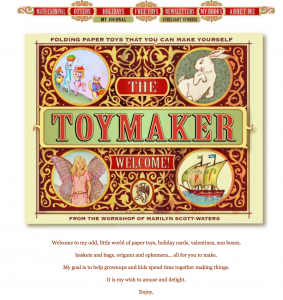
The Toymaker: Folding Paper Toys That You Can Make Yourself

Published on March 6, 2017 | In Blog, Resources | 0 Comment

From the workshop of Marilyn Scott-Waters, who shares freely! 

Welcome to my odd, little world of paper toys, holiday cards, valentines, sun boxes,

baskets and bags, origami and ephemera... all for you to make.

My goal is to help grownups and kids spend time together making things.

It is my wish to amuse and delight.

Enjoy,

Click on a flag to translate this website.


Leave A Message

10 Habits Of Mentally Strong People. You have to be kind to people who are rude to you.

Published on March 2, 2017 | In Blog, Resources | 0 Comment

Mental strength is a choice and a discipline, not an innate quality bestowed upon the lucky. Dr. Travis Bradberry unveils the habits they rely on so that you can start using them today. Dr. Travis Bradberry is Coauthor of EMOTIONAL INTELLIGENCE 2.0 & President at TalentSmart.

Despite West Point Military Academy’s rigorous selection process, one in five students drop out by graduation day. A sizeable number leave the summer before freshman year, when cadets go through a rigorous program called “Beast.” Beast consists of extreme physical, mental, and social challenges that are designed to test candidates’ perseverance.

University of Pennsylvania psychologist Angela Duckworth conducted a study in which she sought to determine which cadets would make it through the Beast program. The rigorous interviews and testing that cadets went through to get into West Point in the first place told Angela that IQ and talent weren’t the deciding factors.

So, Angela developed her own test to determine which cadets had the mental strength to conquer the Beast. She called it the “Grit Scale,” and it was a highly accurate predictor of cadet success. The Grit Scale measures mental strength, which is that unique combination of passion, tenacity, and stamina that enables you to stick with your goals until they become a reality.  Here is a link to this article in The Huffington Post 02/25/2017.  

Leave A Message

« Previous 1 2 3 4 Next »

© 2026 Molly Brave, LLC. All Rights Reserved.

  • Store
  • Blog
  • Privacy Policy
  • Disclaimer
  • Terms of Use
  • Contact