Join Our Family
My Account
Molly Brave logo
  • Home
  • About Us
  • Store
  • Blog
  • Activities
  • Contact
  • Blog

    • All Categories
    • For Parents and Teachers
    • Recommended Books
    • Resources
    • News
    • Mentorship With Mary Alice – An Introduction
      • How To Begin Writing For Children
    • Independent, Hybrid and Self-Publishing

Blog

How To Begin Writing For Children

36. Dare to Disturb the Universe: Madeleine L’Engle on Creativity, Censorship, Writing, and the Duty of Children’s Books

Published on February 6, 2018 | In Blog, How To Begin Writing For Children | 0 Comment

“We find what we are looking for. If we are looking for life and love and openness and growth, we are likely to find them. If we are looking for witchcraft and evil, we’ll likely find them, and we may get taken over by them.”

BY MARIA POPOVA for BrainPickings

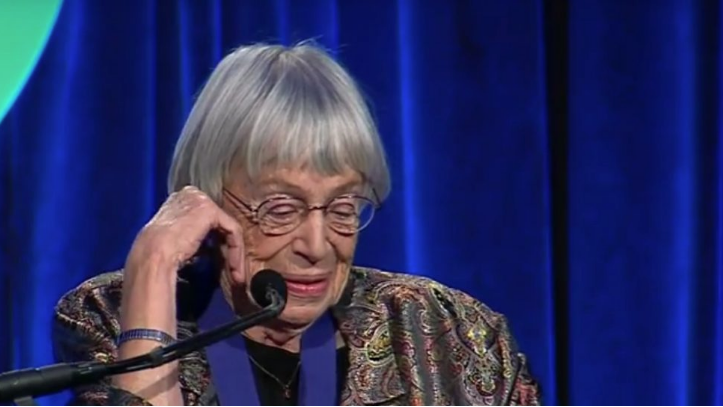
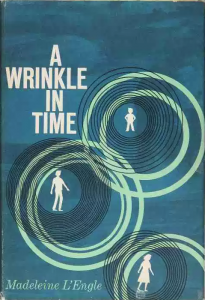
On November 16, 1983 — just two weeks before her 65th birthday and twenty years after winning the prestigious Newbery Medal — Madeleine L’EngleMadeleine L’Engle (November 29, 1918–September 6, 2007), author of the timeless classic A Wrinkle in Time, delivered a magnificent lecture at the Library of Congress. To celebrate Children’s Book Week the following year — the year I was born — the Library’s Center for the Book and the Children’s Literature Center published L’Engle’s talk as a slim and, sadly, long out-of-print volume titled Dare to Be Creative! (public library) — a magnificent manifesto of sorts on writing, writers, and children’s books, as well as a bold and beautifully argued case against censorship.

L’Engle begins by making a point about children’s capacity for handling darker emotions that would’ve made Tolkien proud, one that Maurice Sendak has also asserted and Neil Gaiman has recently echoed. L’Engle observes:

The writer whose words are going to be read by children has a heavy responsibility. And yet, despite the undeniable fact that the children’s minds are tender, they are also far more tough than many people realize, and they have an openness and an ability to grapple with difficult concepts which many adults have lost. Writers of children’s literature are set apart by their willingness to confront difficult questions.

For that reason, L’Engle argues, editors and publishers often attempt to remove these difficult questions from the get-go — a form of preventative censorship, the kind the great Ursula Nordstrom meant in her witty and wise lament that children’s book publishing was run largely by “mediocre ladies in influential positions” unwilling to deviate from the safe route. L’Engle recounts her own brave resistance to such pressures, even in the face of repeated rejection:


Many years ago, when A Wrinkle in Time was being rejected by publisher after publisher, I wrote in my journal, “I will rewrite for months or even years for an editor who sees what I am trying to do in this book and wants to make it better and stronger. But I will not, I cannot diminish and mutilate it for an editor who does not understand it and wants to weaken it.”

Now, the editors who did not understand the book and wanted the problem of evil soft peddled had every right to refuse to publish the book, as I had, sadly, the right and obligation to try to be true to it. If they refused it out of honest conviction, that was honorable. If they refused it for fear of trampling on someone else’s toes, that was, alas, the way of the world.

Though she did eventually find a publisher who believed in the book heart and mind, this still left the question of the general public, where ignorant self-appointed censors lurk. Decades before the golden age of mindless online comments and TLDR-mentality, L’Engle recounts a tragicomic incident:

Recently I was lecturing in the Midwest, and the head librarian of a county system came to me in great distress, bearing an epistle composed by one woman, giving her all the reasons she should remove A Wrinkle in Time from the library shelves. This woman, who had obviously read neither Wrinkle nor the Bible carefully, was offended because she mistakenly assumed that Mrs. What, Mrs. Who, and Mrs. Which were witches practicing black magic. I scrawled in the margin that if she had read the text she might have noted that they were referred to as guardian angels. The woman was also offended because they laughed and had fun. Is there no joy in heaven! The woman belonged to that group of people who believe that any book which mentions witches or ghosts is evil and must be banned. If these people were consistent, they would have to ban the Bible: what about the Witch of Endor and Samuel’s ghost?

The woman’s epistle went on to say that Charles Wallace knew things that other people didn’t know. “So did Jesus,” I scrawled in the margin. She was upset, because Calvin sometimes felt compulsions. Don’t we all? This woman obviously felt a compulsion to be a censor. Finally I scrawled at the bottom of the epistle that I truly feared for this woman.

In a sentiment that Milton Glaser would come to echo decades later in his beautiful meditation on the universe, L’Engle drives home the point of this parable:

We find what we are looking for. If we are looking for life and love and openness and growth, we are likely to find them. If we are looking for witchcraft and evil, we’ll likely find them, and we may get taken over by them.

She adds an important disclaimer on the difference between censorship and discernment:

We all practice some form of censorship. I practiced it simply by the books I had in the house when my children were little. If I am given a budget of $500 I will be practicing a form of censorship by the books I choose to buy with that limited amount of money, and the books I choose not to buy. But nobody said we were not allowed to have points of view. The exercise of personal taste is not the same thing as imposing personal opinion.

With a riff on T.S. Eliot’s famous line from “The Love Song of J. Alfred Prufrock” — “Do I dare disturb the universe?” — L’Engle reflects on the role of reading, and taste in reading, in her own life:

The stories I cared about, the stories I read and reread, were usually stories which dared to disturb the universe, which asked questions rather than gave answers.

I turned to story, then, as now, looking for truth, for it is in story that we find glimpses of meaning, rather than in textbooks. But how apologetic many adults are when they are caught reading a book of fiction! They tend to hide it and tell you about the “How-To” book which is what they are really reading. Fortunately, nobody ever told me that stories were untrue, or should be outgrown, and then as now they nourished me and kept me willing to ask the unanswerable questions.

She offers another autobiographical anecdote that sheds light on how our righteousness works:

One time I was in the kitchen drinking tea with my husband and our young son, and they got into an argument about ice hockey. I do not feel passionate about ice hockey. They do. Finally our son said. “But Daddy, you don’t understand.” And my husband said, reasonably, “It’s not that I don’t understand, Bion. It’s just that I don’t agree with you.”

To which the little boy replied hotly, “If you don’t agree with me, you don’t understand.”

I think we all feel that way, but it takes a child to admit it.

That righteousness — which bears the markings of the fundamentalism Isaac Asimov memorably bemoaned — is what L’Engle believes flattens culture and robs us of its richness:

We need to dare disturb the universe by not being manipulated or frightened by judgmental groups who assume the right to insist that if we do not agree with them, not only do we not understand but we are wrong. How dull the world would be if we all had to feel the same way about everything, if we all had to like the same books, dislike the same books…

Perhaps some of this zeal is caused by fear. But as Bertrand Russell warns, “Zeal is a bad mark for a cause. Nobody had any zeal about arithmetic. It was the anti-vaccinationists, not the vaccinationists, who were zealous.” Yet because those who were not threatened by the idea of vaccination ultimately won out, we have eradicated the horror of smallpox from the planet.

L’Engle examines the heart of zeal, often driven by our failure to grant ourselves the “uncomfortable luxury” of changing our minds. She agrees with Bertrand Russell’s assertion that we are zealous when we aren’t completely certain we are right, in a reflection that brings it all back to children’s books and the art of disturbing the universe:

When I find myself hotly defending something, wherein I am, in fact, zealous, it is time for me to step back and examine whatever it is that has me so hot under the collar. Do I think it’s going to threaten my comfortable rut? Make me change and grow? — and growing always causes growing pains. Am I afraid to ask questions?

Sometimes. But I believe that good questions are more important than answers, and the best children’s books ask questions, and make the reader ask questions. And every new question is going to disturb someone’s universe.

Like Asimov, who found in science fiction a way to make points he otherwise couldn’t, L’Engle sees in fiction a sandbox, a safe place for asking those uncomfortable questions:

Writing fiction is definitely a universe disturber, and for the writer, first of all. My books push me and prod me and make me ask questions I might otherwise avoid. I start a book, having lived with the characters for several years, during the writing of other books, and I have a pretty good idea of where the story is going and what I hope it’s going to say. And then, once I get deep into the writing, unexpected things begin to happen, things which make me question, and which sometimes really shake my universe.

L’Engle makes a heartening case for the presently accepted idea that what makes science interesting — what makes it meaningful and culturally significant — isn’t its certitude and all-knowingness, but its “thoroughly conscious ignorance,” the very not-knowing that Donald Barthelme memorably argued was also at the heart of writing. L’Engle reflects:

I’m frequently asked about my “great science background,” but I have no science background whatsoever. I majored in English Literature in college. We were required to take two languages and one science or two sciences and one language, so of course I took two languages and psychology. Part of my reluctance about science was that when I was in school, science was proud and arrogant. The scientists let us know that they thought they had everything pretty well figured out, and what they didn’t know about the nature of the universe, they were shortly going to find out. Science could answer all questions.

[…]

Many years later, after I was out of school, married and had children, the new sciences absolutely fascinated me. They were completely different from the pre-World War II sciences, which had answers for everything. The new sciences asked questions. There was much that was not explainable. For everything new that science discovered, vast areas of the unknown were opened. Sometimes contemporary physics sounds like something out of a fairy tale: there is a star known as a degenerate white dwarf and another known as a red giant sitting on the horizontal branch. Can’t you imagine the degenerate white dwarf trying to get the red giant of the horizontal branch?

L’Engle ties this not-knowing back to the question of censorship in writing for children:

Perhaps one of the most important jobs of the writer whose books are going to be marketed for children is to dare to disturb the universe by exercising a creative kind of self-censorship. We don’t need to let it all hang out. Sure, kids today know pretty much everything that is to be known about sex, but we owe them art, rather than a clinical textbook. Probably the most potent sex scene I have ever read is in Flaubert’s Madame Bovary where Emma goes to meet her lover, and they get in a carriage and draw the shades, and the carriage rocks like a ship as the horses draw it through the streets. How much more vivid is what the imagination can do with that than the imagination-dulling literal description!

I do not believe that any subject is in itself taboo, it is the way it is treated which makes it either taboo or an offering of art and love.

It is the writer’s duty, L’Engle argues, to continue reclaiming complex ideas from the grip of simplistic taboo:

The first people a dictator puts in jail after a coup are the writers, the teachers, the librarians — because these people are dangerous. They have enough vocabulary to recognize injustice and to speak out loudly about it. Let us have the courage to go on being dangerous people.

[…]

So let us look for beauty and grace, for love and friendship, for that which is creative and birth-giving and soul-stretching. Let us dare to laugh at ourselves, healthy, affirmative laughter. Only when we take ourselves lightly can we take ourselves seriously, so that we are given the courage to say, “Yes! I dare disturb the universe.”

The whole of Dare to Be Creative!, should you be so luck to track down a surviving copy, is a masterpiece of thought and spirit more than worth a read.

Leave A Message

35. Inner Preacher vs. Inner Teacher: Ursula K. Le Guin on Meaning-Making and the Artist’s Task

Published on February 6, 2018 | In Blog, How To Begin Writing For Children | 0 Comment

“That’s how an artist can best speak as a member of a moral community: clearly, yet leaving around her words that area of silence, that empty space, in which other and further truths and perceptions can form in other minds.”

BY MARIA POPOVA for BrainPickings

Inner Preacher vs. Inner Teacher: Ursula K. Le Guin on Meaning-Making and the Artist’s Task

“Once a poem is made available to the public, the right of interpretation belongs to the reader,” young Sylvia Plath wrote to her mother as she reflected on her first poem. What is true of a poem is true of any work of art: Art transforms us not with what it contains but with what it creates in us — the constellation of interpretations, revelations, and emotional truths illuminated — which, of course, is why the rise of the term “content” to describe creative output online has been one of the most corrosive developments in contemporary culture. 

A poem — or an essay, or a painting, or a song — is not its “content”; it transforms us precisely by what cannot be contained, by what is received and interpreted.

That’s what Ursula K. Le Guin explores in a magnificent piece titled “Teasing Myself Out of Thought,” originally given as a talk at Oregon’s Blue River Gathering and later adapted into an essay included in Words Are My Matter: Writings About Life and Books, 2000–2016, with a Journal of a Writer’s Week (public library) — the endlessly rewarding volume that gave us Le Guin on the operating instructions for life.

Reflecting on the framing questions her hosts had posed for the talk — “Where is a writer to find strength and hope in this world? What is a writer’s calling in this time and place? What work will make a difference? And how might we create a community of purpose?” — Le Guin writes:

I’m embarrassed because I come out with the same response to each question. Where am I to find strength and hope in this world? In my work, in trying to write well. What’s a writer’s calling, now or at any time? To write, to try to write well. What work will make a difference? Well-made work, honest work, writing well written. And how might we create a community of purpose? I can’t say. If our community of purpose as writers doesn’t lie in our shared interest in and commitment to writing as well as we can, then it must lie in something outside our work — a goal or end, a message, an effect, which may be most desirable, but which makes the writing merely a means to an end that lies outside the work, the vehicle of a message. And this is not what writing is to me. It is not what makes me a writer.

Le Guin notes that since our school days, we’ve been taught that writing is a means to a practical end — the end of transmitting a message — which much writing indeed is, from memos to love letters to tweets. And yet, she argues, a work of art — be it written or otherwise — bequeaths a gift of meaning beyond messaging:

The kids ask me, “When you write a story, do you decide on the message first or do you begin with the story and put the message in it?”

No, I say, I don’t. I don’t do messages. I write stories and poems. That’s all. What the story or the poem means to you — its “message” to you — may be entirely different from what it means to me.

The kids are often disappointed, even shocked. I think they see me as irresponsible. I know their teachers do.

They may be right. Maybe all writing, even literature, is not an end in itself but a means to an end other than itself. But I couldn’t write stories or poetry if I thought the true and central value of my work was in a message it carried, or in providing information or reassurance, offering wisdom, giving hope. Vast and noble as these goals are, they would decisively limit the scope of the work; they would interfere with its natural growth and cut it off from the mystery which is the deepest source of the vitality of art.

A poem or story consciously written to address a problem or bring about a specific result, no matter how powerful or beneficent, has abdicated its first duty and privilege, its responsibility to itself. Its primary job is simply to find the words that give it its right, true shape. That shape is its beauty and its truth.

It is precisely in the lacuna between message and meaning that art is co-created by artist and audience, by writer and reader. This, of course, is what Susan Sontag had in mind when she presciently admonished, half a century ago, against what we stand to lose when we treat cultural material as “content.” Le Guin illustrates this notion with a simple, elegant analogy:

A well-made clay pot — whether it’s a terra-cotta throwaway or a Grecian urn — is nothing more and nothing less than a clay pot. In the same way, to my mind, a well-made piece of writing is simply what it is, lines of words.

As I write my lines of words, I may try to express things I think are true and important. That’s what I’m doing right now in writing this essay. But expression is not revelation… Art reveals something beyond the message. A story or poem may reveal truths to me as I write it. I don’t put them there. I find them in the story as I work.

And other readers may find other truths in it, different ones. They’re free to use the work in ways the author never intended.

Looking to the great tragedies of ancient Greece, which continue to slake readers’ thirst for meaning millennia later and to reveal different layers of moral truth to each generation, Le Guin observes that “those works were written out of that mystery, the deep waters, the wellspring of art.” With an eye to Keats’s notion of “negative capability” and to the wisdom on Lao Tzu (whose Tao Te Ching Le Guin has amplified in an exquisite translation), she writes:

A poem of the right shape will hold a thousand truths. But it doesn’t say any of them.

Always the artisan of nuance, Le Guin is careful to point out that she isn’t advocating for the “Art for Art’s sake” trope, which she considers flawed in its implication that art is solipsistic and without any responsibility to its audience. She writes:

Art does change people’s minds and hearts. And an artist is a member of a community: the people who may see, hear, read her work. My first responsibility is to my craft, but if what I write may affect other people, obviously I have a responsibility to them too. Even if I don’t have a clear idea of what the meaning of my story is and only begin to glimpse it as I write — still, I can’t pretend it isn’t there.

This sidewise glimpse of truth, Le Guin suggests, is far more effective than the blunt badgering of preaching. Of course, Emily Dickinson knew this when she famously exhorted her reader to “tell all the truth but tell it slant,” and astrophysicist and novelist Janna Levin knew this a century and a half later, when she wrote of truth obliquely illuminated in her stunning novel about Alan Turing, Kurt Gödel, and the legacy of the Vienna Circle: “Maybe truth is just like that.

You can see it, but only out of the corner of your eye.” Le Guin considers the moral reason for letting the reader glimpse the truth out of the corner of her own eye:

What my reader gets out of my pot is what she needs, and she knows her needs better than I do. My only wisdom is knowing how to make pots. Who am I to preach?

No matter how humble the spirit it’s offered in, a sermon is an act of aggression.

Drawing an elegant contrast between the Inner Preacher and the Inner Teacher — a contrast of excruciating necessity in our golden age of self-righteousness aggressively delivered — Le Guin adds:

“The great Way is very simple; merely forgo opinion,” says the Taoist, and I know it’s true — but there’s a preacher in me who just longs to cram my lovely pot with my opinions, my beliefs, with Truths. And if my subject’s a morally loaded one, such as Man’s relationship to Nature — well, that Inner Preacher’s just itching to set people straight and tell them how to think and what to do, yes, Lord, amen!

I have more trust in my Inner Teacher. She is subtle and humble because she hopes to be understood. She contains contradictory opinions without getting indigestion. She can mediate between the arrogant artist self who mutters, “I don’t give a damn if you don’t understand me,” and the preacher self who shouts, “Now hear this!” She doesn’t declare truth, but offers it. She takes a Grecian urn and says, “Look closely at this, study it, for study will reward you; and I can tell you some of the things that other people have found in this pot, some of the goodies you too may find in it.”

And yet, Le Guin notes, even the Inner Teacher isn’t to be put in charge of meaning — for, “after all, she’s the one who taught the kids to expect a message.” She considers instead the ultimate job and responsibility of the artist:

My job is to keep the meaning completely embodied in the work itself, and therefore alive and capable of change. I think that’s how an artist can best speak as a member of a moral community: clearly, yet leaving around her words that area of silence, that empty space, in which other and further truths and perceptions can form in other minds.

Leave A Message

34. Excellent Time Management Tips for Writers

Published on February 3, 2018 | In Blog, How To Begin Writing For Children | 0 Comment

by Norm Schriever, for the BookBaby Blog

I break the writing process into two parts. Part one includes planning, organizing, outlining, researching, reading, and taking copious notes. The second (and most important) part is writing.

A dear friend of mine from college recently reached out via email with a request. “My goal this summer,” she wrote, “is to start writing a book! Any advice on time management would be appreciated.”

She’s much smarter than I am – and a far better writer – so soon enough, she’ll be giving me writing advice. But until then, I figured I’d offer counsel based on what has worked for me.

Identify your high-energy time

I’m a morning person, so my high-energy, high-focus time is first thing in the morning. I get most of my meaningful work done before noon, and when it comes to my book writing and creative time, it all has to be first thing in the morning. That won’t work for everyone, but identifying your optimal working hours is a good first step.

Develop a writing ritual

My writing ritual involves rising way too early, freebasing coffee, playing great tunes on the stereo, and getting down to business. When I first started, I tried putting in long writing days, but that was counterproductive. I never have a problem filling the page, but clarity and focus are the real goal, not just hours invested and word counts. I focus on a one-hour slot that I dedicate to writing first thing every morning. Ideally, I turn my Wi-Fi and phone off, so no email, social media, etc., so I don’t become distracted. If I get into the groove, I can write longer than an hour, or come back to it later in the day. If you stick to a similar plan, you can write a book over the summer, one hour a day, five or six days a week.

The writing process, Part 1: Plan and organize

Loosely speaking, I break the writing process into two parts when I’m writing a book. Part one includes planning, organizing, outlining, researching, reading articles about the craft of writing, and taking copious notes. Because inspiration sometimes hits when you’re in line at the bank or in the middle of the night, I jot ideas down as a memo on my iPhone or in a notebook and refer to them later. But the organization part really helps keep me on track and prevents me from devolving into a crazy person spewing nonsense (OK… the jury is still out on that one). This part can be done after the designated hour – in the morning, at night, or whenever. It doesn’t require the same focus as part two.

The writing process, Part 2: Write!

The second part of writing a book (and the most important) is writing. I’m not being a wise ass. During the designated writing hour, the goal is to get started and not stop. When I start a book, it’s impossible for me to sit down and jump in with “Chapter one page one… The night was hot and humid…”

I begin the writing process with a stream-of-consciousness brain dump about the ideas of the book: the themes, conflicts, dialogue, and especially the characters. Well in advance of actually writing any material that will serve as the actual words of the book, I’m purging my mind of ideas and developing them with these brainstorming sessions. Since characters are so important, I’ll spend a lot of time on characters, fleshing out their lives and desires, values and fears, quirks and characteristics. Ninety percent of that will not end up in the book, but I believe it is important to really know and understand your characters before you set them into action.

The natural flow

So every morning I’m just hacking away at this, fingers on the keyboard for an hour, without many breaks, and then one day it just happens: I start producing the content that will be in the book. Whether it begins with page one or whether I’ve jumped to a pivotal scene or important piece dialogue doesn’t matter: I’m writing.

Ease off the pressure and high expectations

For me, great is the enemy of good. If I feel a ton of pressure to write well, it comes out like crap. So by practicing first, and then focusing on one scene or conversation or whatever to get started, I remove that pressure. I also remind myself daily that the goal is just to get started, not produce a polished, finished book. Everything will be edited and rewritten, several times. So that way I’m not worried about making mistakes or writing crap, and I’m free just to be productive.

A percentage breakdown of the book writing process

This isn’t exactly scientific, but for me, the book writing process is 10 percent preparation and 30 percent writing the first draft. The other 60 percent is spent rewriting and editing (that process sucks, by the way).* But it’s encouraging to know you are fixing mistakes and tweaking your text to get it to a place where someone will actually enjoy reading it!

*Mary Alice Deveny note: Love this clear and concise distillation! Want to take a positive stand on your comment: "The other 60 percent is spent rewriting and editing (that process sucks, by the way)." I find this part of the process makes me a better writer, so I love it.


Related Posts
Write Your Book Using The Time Blocking Method
Planning And Productivity Tips For Busy Writers
How Much Physical Description Is Enough When You Create Characters?
Don’t Start Cold – Five Ways To Ease Into Writing A Book
Develop Your Characters’ Goals And Discover Your Story

Norm Schriever

About Norm Schriever

Norm Schriever is a professional blogger, expat, cultural mad scientist, and enemy of the comfort zone. He’s the author of Amazon best-selling books including The Book Marketing Bible, which he wrote to inspire and empower new and self-published authors.

Leave A Message

33. Way of Story Writing Course from DailyOM, Catherine Ann Jones

Published on January 30, 2018 | In Blog, How To Begin Writing For Children | 0 Comment

11,149 PEOPLE HAVE TAKEN THIS COURSE

"We've become lopsided living only in our heads. Writing, in order to serve the soul, must integrate outer craft with the inner world of intuition and feeling."- Catherine Ann Jones, New York Times
 

Our world is made up of stories. If you don't like the one you're in, write a better one. Like your Soul, the soul of story is a combination of craft and magic, a uniting of head and heart. We live in a world of too much separation and pain, which, for many writers, can be ended by illuminating the oneness of life, through creating powerful characters that live in our individual and collective psyche, awaiting release. Writing is a powerful tool of self-exploration.

Every story has a sacred dimension not because of gods but because a man or woman's sense of self and her world is created through them. These stories orient the life of a people through time, establishing the reality of their world. Thus meaning and purpose are given to people's lives. Without story, we do not exist. The Way of Story is how we discover who we are. 

Create stories that enlighten and empower action

Join master story teller, Catherine Ann Jones as we discover the the how's and why's of writing great stories that have impact and resonance through personal experience and the inspiring insights of other artists, writers, poets and painters. You'll leave this class more prepared than ever to create stories that enlighten and empower action. That's the only thing that can help transform a highly dysfunctional and dangerous world. The writer has that kind of potential power whether writing memoir, short stories, novels, plays, or screenplays. Are you ready to soar into your potential as a writer and help co-create your piece of a new paradigm world? Then join us on our journey to great writing by registering here and now. You'll be very glad you did.

This 16 week course will teach you to develop story, character, & theme into a coherent, emotionally consistent, & marketable story outline. For writers of all levels & all narrative forms including plays, screenplays, stories, novels, & memoir. 


  • Seven Steps to Story Structure
  • Create memorable characters & dialogue
  • Balancing craft with intuitive skills
  • Access and free your potential story
  • Choosing Your Story
  • Awakening the Inner Eye
  • Creating Character
  • Finding Your Voice
  • Story Structure
  • Writing the Story Outline: From Vision to Marketplace
  • Writing Transformational Stories
  • Transcending Writers Block
  • The Way of Story as a Life Path
    Combining solid craft with intuitive skills

    The first purpose of writing is to clarify and reveal something in your self, but the only way to do this is to get it out of yourself. The second purpose of writing is to share it with others, providing a mirror for humanity at large, as a modern day shaman. From Shakespeare to Star Wars, from Dante to le Carre, the way of story is a journey of discovery forged by discipline and craft. Though it is craft that transforms the initial raw inspiration into form, storytelling begins within, and is as much as part of our past as our genetic structure.

Craft alone is not enough. The Way of Story Writing Course offers an integrative approach to writing narrative, combining solid craft with experiential inner discovery and intuitive skills, to guarantee a good story along with the intangible inner dimensions of writing. The transformation of good writing depends on making it one's own from within.

Storytelling is not only the root of film, theatre, literature, and culture, but of the life experience itself. The listener maintains touch with his mythic self and the truths there represented. In losing touch with our myths, there may be a danger of losing touch with ourselves. Today, in modern society, there is a fragmentation which separates most of us from our central core or soul. With all our progress, perhaps something has been lost which earlier cultures knew to value: the soul connection.

"I am often asked by clients and The Way of Story workshop participants, how to choose which story to write. The important guiding line is to choose a story you have a strong emotional connection with. Generally speaking, people go to movies or read in order to feel. Just remember that it is the emotional power of your story that will ultimately determine its success." - Catherine Ann Jones

Stories written by formulas rarely move us, and consequently fail. They are too generic, not about specific people. The challenge is to discover the meaning for your self in the story you have chosen, and then adopt the necessary form that can be meaningful to others. One might say, first, the passion, and only second is craft necessary to birth an authentic and great story.

It is passion in a relationship or marriage that will sustain it for years through thick and thin. Similarly, it is passion in a story that will sustain the writing process through the weeks, months, and sometimes years of completing the work.

It is my belief and personal experience that whenever you follow that inner guide, the world will respond, often magically.

The essence of Art is to use the outer form to convey an inner experience. This sacred thread, your inner most being or Soul, binds you emotionally to what you write, and if given respect, will lead you on to the desired end. Stories written from this center will move mountains -- and even create livelihoods.

About Catherine Ann Jones

Catherine Ann Jones holds a graduate degree in Depth Psychology and Archetypal Mythology from Pacifica Graduate Institute where she has also taught. After playing major roles in over fifty plays on and off-Broadway, she became disappointed by the lack of good roles for women and wrote a play, On the Edge, about Virginia Woolf and her struggle with madness in a world gone mad, Hitler and WWII. The play won a National Endowment for the Arts Award. Thirteen of her plays, including Calamity Jane (both play and musical),The Women of Cedar Creek, and Freud's Oracle, have won multiple awards and are produced both in and out of New York. Her films include The Christmas Wife (Jason Robards & Julie Harris), Unlikely Angel(Dolly Parton), and the popular TV series, Touched by an Angel. A Fulbright Research Scholar to India studying shamanism, she has taught at The New School University, University of Southern California, and the Esalen and the Omega Institutes. Her books, The Way of Story: the craft & soul of writing, Heal Your Self with Writing (Nautilus Book Award 2014), & What Story Are You Living? are used in many schools, including New York University writing programs. Her latest publication is Freud's Oracle, a 1-woman play which has had four productions to date. Based in Ojai, California, she leads The Way of Story and Heal Your Self with Writing, workshops throughout the United States, Europe, Middle East, and Asia. For online courses, blog, workshop schedule, keynote talks, and writing consultant services.

How Does It Work?

Starting today, you will receive a new lesson every week for 16 weeks (total of 16 lessons). Each lesson is yours to keep and you'll be able to refer back to it whenever you want. And if you miss a lesson or are too busy to get to it that day, each lesson will conveniently remain in your account so you won't have to search for it when you're ready to get back to it.

Free Gift

As a free gift, when you sign up for this course, you will also receive the award-winning DailyOM inspiration newsletter which gives you daily inspirational thoughts for a happy, healthy and fulfilling day. We will also let you know about other courses and offers from DailyOM and Catherine Ann Jones that we think you might be interested in.

Get Started Now


Leave A Message

32. Ursula K. LeGuin Interview from 2001 with Philip Martin

Published on January 28, 2018 | In Blog, How To Begin Writing For Children | 0 Comment

"So I worry. Except when I’m writing. Then I know what I’m doing. So then I’m happy."

Ursula K. Le Guin was a major influence in my own path to reading fantasy, primarily her brilliant Earthsea books, beginning with A Wizard of Earthsea, a story of a school for young magicians long predating the Harry Potter series. I always saw her, with some native pride, as eminently American, a voice (along with Peter Beagle) for the writing of literary fantasy that could withstand the test of time, whose work could measure up to the British masters J.R.R. Tolkien, C.S. Lewis, and others.

In this interview, we discussed some aspects of her writing process, including her strong sense of place, a subject dear to my heart.

Le Guin, who passed away Jan. 22, 2018, was also an insightful writer on the topic of narrative, story, and meaning in literature. I’ve quoted her often in my teaching of the writing process, where she especially influenced my perspective that great writing is more story than plot. As Ursula K. Le Guin noted in her book of advice for writers, Steering the Craft, plot is not the same as story. “Plot is merely one way of telling a story, by connecting the happenings tightly, usually through causal chains. Plot is a marvelous device. But it’s not superior to story, and not even necessary to it.” She also wrote:

“Modernist manuals of writing often conflate story with conflict. This reductionism reflects a culture that inflates aggression and competition while cultivating ignorance of other behavioral options. No narrative of any complexity can be built on or reduced to a single element. Conflict is one kind of behavior. There are others, equally important in any human life, such as relating, finding, losing, bearing, discovering, parting, changing.”

Her passing is sad, but she left such a lovely, thoughtful, groundbreaking canon of books. It proves the value of literature, that such writing can be shared over great distances, and even beyond the life of a writer, to influence us, one by one, as we read.

On to the interview, which I conducted by phone:

Martin: I wanted to talk to you especially about writing Earthsea. My first question is what drew you back to that world, years after writing Tehanu, which you called at the time the “last” book of Earthsea?

Le Guin: Well, when I finished Tehanu, I really thought I’d probably come to the end of the story. And I had in many ways. I got them together and so on. But, I did leave a big unanswered question at the end of the book: who is the child Tehanu, who or what is she? The dragon [Kalessin] has called her “daughter.” What does that mean? So there were a lot of questions hanging. At the time I thought, well, that’s alright, you don’t have to answer all the questions at the end of a book.

But as time went on through the ’90s, I kept thinking about Earthsea, and I found myself going back in its history to find out some questions that puzzled me about the way things are in that place.

For instance, like why aren’t women allowed to be mages; why can they only be witches, and despised for it? Things like that. So I questioned why was it the way it was—and what was going to happen next?

And I began getting answers. In other words, I began getting stories.

So those became the collection, Tales from Earthsea. And the last one of them, “Dragonfly,” leads right into the new novel, The Other Wind. It’s answering that series of questions.

You know, it’s like exploring a country. You’ve been over this mountain range, but there’s another one. You want to go see what that one looks like. And to discover the country in between. And—well, of course, nobody really can do but me. That’s another thing—to have this feeling of, well, it’s up to me.

Martin: A feeling of obligation?

Le Guin: I think responsibility might be the word. Of course, I have gotten a good deal of feedback on the Earthsea books. People really did want to know what happened after Tehanu. In fantasy, the readers—both children and adults—want to know things. And they are not shy about asking what they want to know.

Martin: How you go about it? Things start in your imagination somehow, and then they become some kind of story, and then you start to link these together…..

Le Guin: A lot of the linkage takes place subconsciously. Well, some of it, you have to sit and figure out. It’s a hard question to answer, because I never understood the processes of making a story. But, you sort of see where the story’s going in a general way. Once again I’ll use the landscape metaphor—it’s like you’re standing on a hill and you can see some of the country ahead. You don’t know exactly how you’re going to get where you’re going. And you might not be all that sure of exactly where you’re going. But you have a some sort of general map in mind.

So what I’ve done with these later stories is—well, with all of them really—is just plunge in and find out what is going on.

Of course, soon the characters begin to lead you. You have to find out what they say and what they do, and let them do it. You can’t push them around. You can’t be in total control—or else you’ll lose that input from your own unconscious, which comes through the characters.

Martin: Jane Yolen says she writes stories to find out what happens.

Le Guin: Tolkien said he wrote the whole Lord of the Rings because nobody else would. It’s a wonderful reason. You write a book that you want to read.

Martin: I was reading your story, “The Bones of the Earth,” and in it, the mage talks about standing on the island of Gont and imagining the deep, physical roots of the island, and he realizes that all the islands of Earthsea are connected, far under the water. Which is a very striking image for the writing of Earthsea, because you’ve got a series of stories and books with a lot of deep connections.

Le Guin: Yes. And the sea is what connects the islands—and the sea is what separates them. Both.

Martin: And it’s still very mysterious to people. The connections aren’t always as obvious as with some writers—as linear, that is. Some writers just map everything out from the beginning and lay it out and there it is.

Le Guin: No, a lot of the connections in all my work remain mysterious to me. Sometimes I see them explained by an intelligent, sensitive critic, and I say, “Oh, wow, is that what I was doing?’ I really think that’s a very common experience for writers.

Our business really is not that. We aren’t critics. We’re storytellers. So our business is just to get the story right. And in a sense, the intellectual connections are such that we don’t have to make them if we’ve made the emotional ones.

And if the place is coherent. That sort of a touchstone word in fantasy, isn’t it? The fantasy world, no matter how large or how small, has to be internally coherent. It can’t contradict itself. It can contradict the real world, happily! But it has to follow its own rules. Be consistent.

Martin: I hear you mention the word ‘true’ in the sense of stories being true. Do you mean true to their own fantasy—or do you mean true in a larger sense?

Le Guin: Yes, partly, “true” in the senses of being consistent and coherent—true to themselves. And if you start a moral question or an emotional problem—following it through. Not just slapping an easy answer on to it. But to follow through. In other words, that they are morally and emotionally true or valid. True to human experience. Even if the stories are extremely fantastic.

Martin: Where does Earthsea come from? From inside you or is it something that’s out there beyond you … ?

Le Guin: To me, Earthsea is something that when I look wherever it is you look when you’re writing a story, that’s one of the landscapes I see. So it must be partly a map of me. But it seems—I feel more as if I just went there, rather than it was me. It’s more like I was a traveler in that country, finding out things and observing.

Martin: So when you write, how do you put yourself then in that frame of mind that you see or find Earthsea?

Le Guin: Well, one thing that many people can relate to, including a lot of kids, is this:

One of the first things I did when I wrote the very first story about Earthsea which was published long ago—let’s see, is that “The Rule of Names” or “The Word of Unbinding”? Whichever one came first. Anyway, there were two small stories that came long before the Earthsea books.

And when I was writing one of those stories, I drew a map of this place with all these islands. And that was the beginning. And you know an awful lot of kids draw maps of imaginary places. And some grownups go right on doing it.

Martin: We might have to use the term “so-called” grownups.

Le Guin: [laughs] Well, that’s alright. But look at Tolkien, he was pretty grownup. And he drew very careful maps all his life, right? And made up languages too.

Sometimes when I’m lecturing, I ask “How many people here drew maps of imaginary countries when they were little?” and sometimes more than half of the people put their hands up. This is a way of somehow exploring a part of yourself, I guess.

Martin: I wanted to talk a little bit more about “The Bones of the Earth.” A wonderful story—I really enjoyed how you mixed the everyday, the mundane chores, with the huge, cataclysmic, big event of the earthquake. That story is as much about gathering eggs as about earthquakes.

Le Guin: Well, it seems to be important to me to keep my wizards and witches grounded in ordinary life—just the kind of really gritty, plain things that people have to do to make a living in most places, most times. I don’t know why that is. I couldn’t give you a simple answer why that’s important to me, but it has been right from the start.

Ged starts out as a goat herd, you know, in a really poor little village. So the whole wizardry—and all the magic and the beauty and glory of the magic they can do—grows out of this very gritty, ordinary ground. It just makes it real to me, I guess.

Martin: That story is literally about mud.

Le Guin: There’s a lot about mud in that story. He has to walk right into the mud and then he has to go right into the ground. Yes, so that one takes you back down to the ground.

Martin: It has a beautiful image at the end where the mage Ogion lies down on the ground and weeps. And he makes little more mud.

Le Guin: Yes, yes. Now you see, he just did that, I didn’t think that up. I swear I didn’t. He just did it.

Martin: So that all just happens?

Le Guin: When the story’s carrying you, like then, yes, it’s like riding a horse or a ship or something. It takes you where you need to go. And that is such a wonderful feeling.

Martin: It’s like athletes who train, or musicians—after a while their bodies know just what to do without thinking about it consciously. I play the fiddle, and I can play a tune not thinking about it—my fingers seem to know what to do. I can watch them in amazement.

Le Guin: Yes, I have a daughter who’s a cellist. And I often use that analogy with young writers, who say “Well, what do I do to be a writer?’ And I say, well, you write.

And before you write, you learn your language, the way a musician learns the notes and the chords and so on. You learn grammar and syntax and the rules of your language. And some of them kind of look real crestfallen [laughs]—“Oh, we thought you became famous instantly.”

But practice of an art means mostly practice, doesn’t it?

Martin: For a story like “The Bones…,” do you contemplate specific themes or images—like mud, for instance—before you start?

Le Guin: No, those themes and motifs just begin to show up in the story. Often they are the part that comes without my even noticing them. Until somewhere along in the story, I’m looking ahead, or I’m casting back and revising a little and I say, “hey, look at that—look at that mud. That belongs here!” Then I might be a little bit more conscious about it. It’s mostly in revision, I think, that those repeated motifs, in the musical sense, get heightened and brought out a little.

Martin: That really became a story about friendship. It’s almost like the earthquake is, well, not really incidental, but it happens and is over in a few paragraphs.

Le Guin: Yeah, well, I’m not very much of an action writer. I’m a relationship writer. So it’s the relationship between the mage Dolce and his student Ogion. And also, the almost untold relationship between Dulce and his teacher, who was a woman, curiously.

So there’s a relationship and a shadow of the relationship. And then, of course, those who know the first book of Earthsea know that Ogion is Ged’s teacher. So there’s a shadow going forward as well. So I’ve got three relationships there.

Martin: I also think of your stories being very much about a sense of place. What can you tell me about that?

Le Guin: Yes, it’s very strong in my stories. A lot of my stories really start with the discovery of a place—and who lives there. That’s how the The Tombs of Atuan began. I took a three-day trip, my first trip, into the Oregon high desert. I’d never seen country like that or anything remotely like it in my life. And I came back knowing that I had to write a book about it. And the place then sort of gave me the people. How that happens though, I don’t know what to say.

Martin: I think then it must be, well, it’s what starts you.

Le Guin: Yes. I respond intensely to place and the mood of a place and the atmosphere of places and so on. After all, place has something to do with community often and therefore with people really understanding each other. But there is a magic of place that I think many, many people feel. That’s why so many people really want to go see Stonehenge or whatever. Because there is something about the place.

Martin: At the same time, at least in non-native culture, place is often undervalued in America. I think people don’t realize how much place has created them, and their character.

Le Guin: No. Of course, we were sort of a people born on the run. We’re getting away from here, and we’re going to keep moving west. It may not be entirely accidental that I am a child of California and Oregon. You can’t go any farther west. But it was a pretty good place to settle. I feel very deeply and very strongly connected to California and Oregon. I’m really rooted here. And that has increased during my life rather than lessened.

Martin: Growing up in your family, with your parents’ interest in traditions and native ways, was that as strong an influence as it seems to be in your work?

Le Guin: Oh, it must have been. It was a good childhood for a writer. There were books all over the house, and people talking about books, and people telling stories orally. And my father talking to Indian friends who were telling him stories, so they could be preserved—this whole atmosphere of respect for story, for the word—my life was full of it. It was a good start for me—seeing this commitment to bearing witness, in a way, to the native cultures of the region. These people lived, and this is how they lived, and the only way we have to save that, really, has been words.

Martin: And in the case of Ishi, that eventually was all that was left.

Le Guin: That’s right. It is all that is left now of a great many Californian people who my father knew. He knew many members of people who now, literally—they’re all gone. When he got here in 1900, he saw that happening.

But, too often people today are content to think, oh, the old poor Indians, they’re all gone. Well, they’re not. Some peoples are, but the Indians are here and they are more here than ever. And anyone who laments the passing of the Indians—nonsense. They’re a very powerful, vital part of American society.

But their languages are in great peril. Most languages with less than millions of speakers are in peril. We’re losing languages is just as bad as we are losing species.

Martin: Yes, exactly. Speaking of small languages—did you read Tolkien at an early age?

Le Guin: Well, I was born in 1929, and he hadn’t been published yet. I didn’t read him until the ’50s, so I was well in my thirties. And I was just—oh, man! I was bowled over. But I was glad that I hadn’t read him as a child because he probably would have had such an overwhelming influence on me. I had already begun finding my own voice, you know, so that he didn’t just blow me out of the water the way he might have done.

Martin: When I think of The Hobbit, I often think about the subtitle: There and Back Again. I just love that phrase.

Le Guin: That phrase, There and Back Again, does really describe Tolkien’s writing, which is highly rhythmical. It’s there and then back, like a pendulum beat. It’s moving, you’re going forward. It’s a walking beat, that’s what it is. It’s a marvelous phrase about his own work.

And his journeys are always spirals. You do end up back home. But of course home is different from what it was. Yes, you come back, but hopefully it’s not just a closed circle, but sort of a spiral. You’re coming back on a different level—to a somewhat changed place.

In one of my books, somebody says the important thing about life is coming home, as long as you understand that home isn’t a place you ever saw before! It’s a little bit like Heraclites saying you cannot step twice into the same river.

For instance, in The Lord of the Rings, when they get home, things have spiraled down badly in the shire. And it takes a lot of hard, gritty work to restore it to anything like what is was.

Martin: So you have returned yourself, to writing about Earthsea.

Le Guin: Because of unanswered questions. And curiosity about relationships. And about characters. I was curious, before I started writing The Other Wind, about what is happening to the young King. Being king is kind of tough on people. It tends to change their characters. So how’s he doing? It was very interesting to find out.

Martin: How much of this interest comes from your readers?

Le Guin: What’s useful to me, I have to say, is their encouragement. To know that people love the stories—that they read their own lives into the stories in different ways. Whether or not they read the book the way I intended—whether or not it means to them what it means to me—really doesn’t matter so long as they find it nourishing. And when they tell me about it—there’s just no doubt about that feedback from the audience keeps an artist happy and working.

And so many writers get so little feedback. That’s one nice thing about writing science fiction and fantasy is that you have these active, verbal people reading you who are very likely to write you a letter. People responding—telling you what they think about what you said. That’s really cool.

Martin: Why is that?

Le Guin: It’s partly because this is genre fiction—and people aren’t afraid to do it. People are afraid to write the great [“literary”] authors because they seem, you know, they’re big names with much critical applause and stuff like that.

But we who write in genres like fantasy and science fiction, we’re not set apart in peoples’ minds by academic barriers. And there is a real community of people who love fantasy and science fiction. They tend to write each other mostly, but they also write their authors and keep in touch with them.

And particularly for a young writer who doesn’t know whether anybody’s ever going to listen to what they write—to get this kind of feedback can just be incredibly encouraging and decisive.

Unfortunately, science fiction and fantasy mostly just don’t get as much academic attention. In academe, there’s still a lot of English professors who just cannot admit that Tolkien is one of the great writers of the 20th century. They just can’t. They never will. They just haven’t learned how to read him.

Fantasy and science fiction were cut out of respectability long ago, early in the century, in English literature—not in French though. And they haven’t really got back in yet, although there’s now a lot of good people teaching fantasy and science fiction in the colleges.

When I teach workshops in writing, I often do teach only fantasy and science fiction, partly because for a new writer, you can get published. And the other thing is that there is a community that you can enter in these fields which can be very, very useful to a young writer. You meet other writers and you meet your readers. Maybe just electronically or by letter, but maybe also face to face. And I think this is healthy for artists.

Martin: So after The Other Wind, are you thinking about coming projects? Or are you taking a break?

Le Guin: I’m doing what I do between projects—which is worry. You know, I never know what’s going to happen next. And the only way I can arrive at it is to worry my way to it. So, that’s what I’m doing now.

A lot of writers say they hate writing. I love writing. What I hate is not writing. All the time you have to wait between stories and books—and you do. You just can’t do it all the time. Most of us can’t.

So in between—yes, this is when you worry. “Am I going to write something?”

“What’s it going to be?”

“Have I gone dry?”

“Should I do this, should I do that?”

So I worry. Except when I’m writing. Then I know what I’m doing. So then I’m happy.


Philip Martin is an award-winning author and editor of many books for adults and young readers. A past acquisitions editor for The Writer Books, he is also the author of A Guide to Fantasy Literature, The Purpose of Fantasy, and a number of books of advice for authors, including How To Write Your Best Story. He lives in Milwaukee, Wisconsin, where he directs Great Lakes Literary, offering support services for emerging writers.

Leave A Message

31. Teaching Authors: Six Children’s Authors Who Teach Writing

Published on January 26, 2018 | In Blog, How To Begin Writing For Children | 0 Comment

The TeachingAuthors are six children's book authors with a wide range (and many years) of experience teaching writing to children, teens, and adults. Here, we share our unique perspective as writing teachers who are also working writers. Our regular features include writing exercises (our"Writing Workouts"), teaching tips, author interviews, book reviews, and more. Click here for detailed information about our "Writing Workouts." For our individual bios, please see the "About Us" page. To contact us regarding reviewing a book on the craft of writing, see the section below labeled SUBMITTING BOOKS FOR REVIEW.
 
  • Home
  • About Us
  • Links
  • Teachers
  • Young Writers
  • Visits
  • Writing Workouts


Writing Workouts

Writing Workouts have been a regular TeachingAuthors feature since early on in our blog. We invite writers to try these writing exercises to develop their writing skills, and we encourage classroom teachers to use them with their students. The above logo--a set of barbells and a ribbon with a medal--is meant to represent how everyone who works out with us is a winner! Click here to see all posts containing Writing Workouts.

Beginning in January, 2013, we separated our Writing Workouts into stand-alone posts published on Wednesdays. The Wednesday Writing Workouts are still typically written by members of the TeachingAuthors team, but sometimes they are contributed by guest TeachingAuthors. Click here to access all our Wednesday Writing Workouts.
And, as always, Happy Writing!
Carmela

Leave A Message

30. Can a Photo Book Win a Caldecott Medal? Hornbook discussion

Published on January 10, 2018 | In Blog, How To Begin Writing For Children, Recommended Books | 0 Comment

Why the Hell Hasn’t Photography Won the Caldecott?!?
NOVEMBER 1, 2017 BY ELISA GALL AND JONATHAN HUNT 21 COMMENTS

Mine was the 21st comment under this discussion.

Discussion published on Calling Caldecott, a conversation between Elisa Gall and Jonathan Hunt about photography as a medium. Say cheese. –J.D.

ELISA GALL: So, last I checked with ALSC Youth Media Awards aficionado K.T. Horning, a photographic picture book has yet to receive Caldecott recognition. There have been books with photographic elements, like Knuffle Bunny (2005 Honor) and Smoky Night (1995 Medal), in which photographs are used for backgrounds. There have been books like Trombone Shorty (2016 Honor), which contain photographs as part of mixed-media collage art. There are also books where the illustrations are photographs of 3D art, like Golem (1997 Medal), Viva Frida (2015 Honor), and Radiant Child (2017 Medal). But a picture book illustrated with straight-up photographs has yet to win. Do you have any thoughts on why that might be the case?

JONATHAN HUNT: My Caldecott committee actually picked two books that fall in that last category — Viva Frida (illustrated by Yuyi Morales) and The Right Word (illustrated by Melissa Sweet). Anyway, as to reasons for not having a “pure” photography book, I think there are several. First, there really isn’t a big pool of books that use photography as the exclusive medium. With the advent of digital technology, we are seeing more and more of them, but we are also seeing lines blurred. People are using that digital technology to manipulate images. Peter Brown, Jon Klassen, and Dan Santat, for example, have been known to scan textures and colors as files and then digitally manipulate them to appear as if they used a hand-crafted medium. Second, I think people don’t realize the award isn’t for the best art; it’s for the best picture book — and that means the words are important, too. You may have a small pool of photography books to begin with, and then you have to narrow it down to those which are also good picture books. Finally, I think there is a perception or a bias that photography does not require as much skill; draftsmanship in various mediums is seen as inherently more artistic. So that’s my theory. Does any of that resonate with you?

ELISA: You’re right that there isn’t a big pool of books that use photography as the exclusive medium. The recent example that always comes to mind for me is My People, for which photographer Charles R. Smith Jr. won the Coretta Scott King Illustrator Award in 2010. And we both know that just because a book hasn’t received Caldecott recognition doesn’t mean that it wasn’t part of closed-door deliberations. I’m interested in your idea that draftsmanship in various mediums is seen (even if subconsciously) as inherently more artistic. This is likely true (although I consciously reject the idea that assumed difficulty is a factor necessary for a finished book’s excellence), but I also think part of the reason we haven’t seen a lot of photography books recognized is that many books illustrated with photographs contain “previously published” images and are determined ineligible.

JONATHAN: Meet Cindy Sherman is probably a good book to examine in order to deconstruct the complexity of some of these issues. I think the photography is stunning, but the text-to-picture ratio is such that it doesn’t “feel” like a picture book; it feels like an illustrated book. But here is the Caldecott definition of a picture book:

“A ‘picture book for children’ as distinguished from other books with illustrations, is one that essentially provides the child with a visual experience. A picture book has a collective unity of story-line, theme, or concept, developed through the series of pictures of which the book is comprised.”

Is Meet Cindy Sherman a visual experience? Undoubtedly. Does it have a collective unity of story-line, theme, or concept? Absolutely. The book describes her work as an artist, and the pictures include various portraits of herself in a myriad of guises. If this book were to win — and I don’t think it will; this is more of an intellectual exercise — it would be interesting, because there is no indication that Sherman collaborated on the book with Jordan and Greenberg. I’m not sure that artistic control of the book is explicitly mentioned in the criteria, but isn’t it sort of implied?

I’m also going to push back a bit on your “previously published” comment, because the back of the manual expands on and clarifies this. The intent is to ensure that a book is a new creation and not a re-creation from some other work. This does not mean that some minor portion of the work cannot have appeared elsewhere. It does mean, however, that no significant part of the book under consideration was originally part of another work. Not all cases are clear-cut, and each committee must make its own judgments about originality. Where consensus is not easily reached, the chair should discuss the issue with the priority consultant, who may also consult the ALSC president, the executive director, the board, or previous chairs.

Sherman’s photographs have always been a part of exhibits. They have been published, after the fact, in various books. Some of these photographs may have appeared in other books, but I do think this is essentially a new creation. Others will obviously disagree. This book has so much working against it, but the photography is wonderful, head and shoulders above most of the stuff we’ve seen in children’s books. Perhaps Neal Porter should recruit Cindy Sherman to do an original picture book, so it can become our first “pure” Caldecott photography book?

ELISA: Thanks for sharing those pieces from the manual. It’s fair for you to push back, but I agree with you!  I was making an assumption about how some of the roadblocks to photography you mentioned, mixed with stock photography or images that also appear in art books or elsewhere, might lead a committee to determine a book is ineligible. Unless we are on the committee making the decision, we’ll never know for sure.  The more I think about it, the more I agree with you that there is a bias against photography. Two big ideas are coming to the surface for me:

  1. Photos are everywhere. They are part of our everyday life, so we start to view them as ordinary (read: not fine art), and many of us lack practice and training in evaluating photography critically.
  2. We all can take photos, and it is possible (even if unlikely) for an unskilled person to fortuitously take an amazing photo. It is much more difficult for someone to accidentally create a genius watercolor.

You joke about Neal Porter recruiting Cindy Sherman to do an original picture book, but I can’t think of a photographic picture book with a stronger “visual experience” than Meet Cindy Sherman. Sherman is the illustrator here (you are right that it is implied). Her name is even on the title page (because it is in the title).

This is the Sherman picture book we need, with stand-out visuals coupled with excellent research that spotlights her work and simultaneously scaffolds readers’ understandings, putting the photographs in context. It’s a picture book about a photographer and her photography which uses said photography. (Excellence of execution in technique employed, check. Excellence of pictorial interpretation of theme or concept, check. Appropriateness of style, check. Delineation of theme, mood, or information, check. Excellence of presentation in recognition of a child audience, check.) What else could we ASK FOR?!

The text-to-picture ratio discussion often perplexes me, especially since we can always find examples of text-heavy Caldecotts. I noticed that in trim size and length, April Pulley Sayre’s Full of Fall, which is also illustrated through photography, looks more like a “traditional” picture book. Have you had a chance to take a look at it?

JONATHAN: Yes, I think Full of Fall is another great book to discuss this bias. I think the assumption is that we could have all clicked the button that took those photos; all you have to do is wander outside in New England in the fall. And while that may be true, can’t we all draw the Pigeon, too? I know, I know: there aren’t many books like Don’t Let the Pigeon Drive the Bus, either. But I definitely think there is an unconscious hierarchy of which mediums require more skill. And this is a poetry book with a light focus on science, neither of which are heavily favored by Caldecott committees over the years, so I think it’s complicated because there are actually multiplebiases that are potentially in play.

But laying all that aside for the moment, here’s what I notice about Full of Fall: there’s a great use of color and light; the various textures of the leaves are captured wonderfully; there is a great sense of composition in the full-page spreads and use of frames to present close-up pictures of leaves in contrast to full landscape views, incorporating the surroundings — birds, sky, animals, other plants, water. This provides nice context. I’d love to share this with children!

But here’s the thing: as much as I can appreciate this book, Wolf in the Snow is the high-water mark for me. That book elicits such a strong emotional response, and while I know photography can do that, we don’t see it in picture books. Nor do we see the same degree of narrative storytelling.

ELISA: I completely agree with your assessment of Full of Fall.  Everything you pointed out — from the use of color and light to the alternation between close-ups and views from afar — demonstrates excellence. I love the build-up with smaller frames leading to page turns revealing full-page spreads, not to mention the simple but ever-on-theme orange endpapers. The only downside to this book for me is the typeface, which is light and skinny and can sometimes be hard to find on the page, even when you’re looking for it.

You are right that the triple threat of science, photography, and poetry themes make this book a bit of an oddball. I do think your points about Wolf in the Snow, “strong emotional response,” and “same degree of narrative storytelling” are interesting. This book doesn’t have a strong story per se, and it might feel more workhorse-like than others, but to me that does not make it any less successful in its “collective unity of … concept, developed through the series of pictures of which the book is comprised.” Full of Fall elicits, through its images and to the right reader, a hugeemotional response. What better way to evoke the sights, sounds, feels (to your point of texture), and smells of the season? The last one might be a stretch, but to me, this book is like the scent/flavor of pumpkin spice: It’s not for everyone, but those who love it, LOOOOOOOOOOVE it.

I love Wolf in the Snow too, though!

JONATHAN: While I’m not sure that Full of Fall lives up to that Wolf in the Snow standard (or After the Fall), at least for me, I think it compares more favorably to something like In the Middle of the Fall, which also presents a visual narrative of the changing of the seasons.

ELISA: You’ve included the titles of so many other excellent 2017 picture books! While I’m compelled to echo your cheers for After the Fall and list a few of my not-yet-mentioned favorites, due to space limitations I think our support for additional books will have to continue elsewhere. I’ve enjoyed this conversation on photography and believe it’s a great reminder of the challenge and thrill of comparing each book with the next — and how many different kinds of books there are that fit the definition of “picture book” as presented in the Caldecott manual. I trust this year’s committee will have fun learning from each other as they discuss and decide on this year’s most distinguished. I can’t wait to see what they choose!

Do you have a good title idea for this post, other than one that doesn’t use the low hanging fruit of photography puns?

JONATHAN: What about–

A PICTURE IS WORTH A THOUSAND WORDS—EXCEPT WHEN IT’S A PHOTO

LOOKING AT PHOTOGRAPHY THROUGH THE LENS OF THE CALDECOTT

WHY THE HELL HASN’T PHOTOGRAPHY WON THE CALDECOTT?!?

IT’S SO EASY—NOT: PHOTOGRAPHY AND THE CALDECOTT

About Elisa Gall and Jonathan Hunt

Elisa Gall is the youth collection development librarian at the Deerfield Public Library in Illinois. Jonathan Hunt is the coordinator of library media services at the San Diego County Office of Education.


Leave A Message

29. Fifteen Attainable New Year’s Resolutions for Writers

Published on January 6, 2018 | In Blog, How To Begin Writing For Children | 0 Comment

This list of specific action items offers simple ways for you to achieve more with your writing, planning, and overall approach to self-publishing a book in 2018. Check out our 15 New Year’s Resolutions for writers.  by IngramSpark Staff (@ingramspark) Jan. 01, 2018 
 

1. Commit to Starting/Finishing a Book This Year by Setting Realistic Writing Goals

Whether an idea is just starting to brew or has been in the works, 2018 is the year you publish a book. How? By creating a plan for completion. Maybe you aren’t writing a chapter per week, but per month. Establish a time frame that works for you and stick to it.

2. Read at Least Five New Books in Your Genre

It's important to keep up-to-date on new trends in your genre. There is a lot to be learned from your fellow authors: good and bad. Read, read, and read some more.

3. Visit Your Local Bookstore and Library at Least Once a Month

Since reading more is already one of your New Year’s resolutions, this one should be easy! And we don’t mean just walk in the door and browse. Attend special events, buy/check out books, volunteer when the opportunity arises. A monthly visit to your local bookstore or public library is a simple action that will help you build useful self-publishing connections.

4. Always Carry a Notebook

Inspiration can strike during the most unlikely of times. Whether on the train or out to lunch, make sure you have a way to document your moments of brilliance.

5. Research Books Like Yours Every Month

Take note of price, format, and trim size. What elements, outside of the content, are readers in your genre looking for? What types of book covers do they have? What back cover copy is being used or keywords are you seeing in their book descriptions online? How are these books being shelved?

6. Spend Time Researching Your Subject Matter

Even if you are writing fiction, research into the subject matter you are writing about will help keep ideas fresh, genuine, and most likely spark some new ones.

7. Eliminate Distractions

Find a spot to write that allows you to focus. An easy solution to this roadblock is setting defined work periods for research and writing.

8. Determine a Realistic Audience

Grab a pen and paper and write down your demographic. Add segment traits like: where do they spend their time? What media do they consume outside of books? Where do they shop?

9. Create a Marketing Plan for Engaging with Your Ideal Audience

Once you know who your audience is, don't just start throwing out generic promotional content, hoping something sticks. Make a targeted plan for each demographic.

10. Build Your Following

Regardless of whether you do this via social media or through email marketing or at author events, the best way to build your audience is by engaging. That means blogging, replying to comments, sharing others’ content, and keeping them in the loop with emails, newsletters, etc.

11. Define Specific, Quantifiable Publishing Goals

Make a list of measurable achievements. These can be personal author goals or actions you want readers to take. When you know why you want to self-publish a book, your focus will become easier and success will follow.

12. Get Help From Professionals

If you're not a professional editor or book designer, your book is going to need those things. Do your research so that when you're ready to publish your book you aren’t delayed with any logistical or production details.

13. Educate Yourself About the Publishing Business

Keeping up with your publisher education can only help build on your publishing success. If you’re unsure where to start, IngramSpark offers a self-publishing IQ quiz that can help point you in the right direction. Depending on your results you will be directed to resources, like articles and guides, that can help inform your publishing success.

14. Join a Community and Be Active on a Weekly Basis

Most book communities provide public forums—conferences, online boards, social media profiles—that allow you to participate in a wider capacity. Follow influencers, post original content, share others’ content, ask for feedback, volunteer. There’s a lot of value in surrounding yourself with people who can point you in the right direction.

15. Self-Publish a Book in 2018

Do it; publish your book. Use IngramSpark for a quality book combined with book distribution that allows you global reach, reputation, and value. You're more than capable of turning these New Year’s resolutions into a self-published book. This is the year!

Leave A Message

28. E.B. White on How to Write for Children and the Writer’s Responsibility to All Readers

Published on December 20, 2017 | In Blog, How To Begin Writing For Children | 0 Comment

“Anyone who writes down to children is simply wasting his time. You have to write up, not down.”

By Maria Popova in BrainPickings

The loving and attentive reader of children’s books knows that the best of them are not one-dimensional oversimplifications of life but stories that tackle with elegant simplicity such complexities as uncertainty, loneliness, loss, and the cycle of life. And anyone who sits with this awareness for a moment becomes suddenly skeptical of the very notion of a “children’s” book. Maurice Sendak certainly knew that when he scoffed in his final interview: “I don’t write for children. I write — and somebody says, ‘That’s for children!’” Seven decades earlier, J.R.R. Tolkien had articulated the same sentiment, with more politeness and academic rigor, in his terrific essay on why there is no such thing as writing “for children.” But one of the finest, most charming and most convincing renunciations of the myths about writing for children comes from E.B. White, nearly two decades after he sneezed Charlotte’s Web.

In a 1969 interview, included in the altogether unputdownable The Paris Review Interviews, vol. IV (public library) — which also features wonderfully wide-ranging conversations with Haruki Murakami, Maya Angelou, Ezra Pound, Marilynne Robinson, William Styron and more — White turns his formidable amalgam of wit and wisdom to our culture’s limiting misconceptions about storytelling “for children.”

When the interviewer asks whether there is “any shifting of gears” in writing children’s books, as opposed to the grownup nonfiction for which he is best known, White responds with the rare combination of conviction and nuance:

Anybody who shifts gears when he writes for children is likely to wind up stripping his gears. But I don’t want to evade your question. There is a difference between writing for children and for adults. I am lucky, though, as I seldom seem to have my audience in mind when I am at work. It is as though they didn’t exist.

Echoing Ursula Nordstrom — the visionary editor and patron saint of childhood who brought to life not only Charlotte’s Web but also such classics as Goodnight Moon, Where the Wild Things Are, and The Giving Tree, and who famously insisted that children never want a blunt creative edge — White adds:

Anyone who writes down to children is simply wasting his time. You have to write up, not down. Children are demanding. They are the most attentive, curious, eager, observant, sensitive, quick, and generally congenial readers on earth. They accept, almost without question, anything you present them with, as long as it is presented honestly, fearlessly, and clearly. I handed them, against the advice of experts, a mouse-boy, and they accepted it without a quiver. In Charlotte’s Web, I gave them a literate spider, and they took that.

Long before psychologists knew that language is central to how human imagination evolves, White is especially adamant about the blunting of language:

Some writers for children deliberately avoid using words they think a child doesn’t know. This emasculates the prose and, I suspect, bores the reader. Children are game for anything. I throw them hard words, and they backhand them over the net. They love words that give them a hard time, provided they are in a context that absorbs their attention. I’m lucky again: my own vocabulary is small, compared to most writers, and I tend to use the short words. So it’s no problem for me to write for children. We have a lot in common.

Like C.S. Lewis, who contemplated what writing for children reveals about the key to authenticity in all writing, White extrapolates the writer’s responsibility to all audiences:

A writer should concern himself with whatever absorbs his fancy, stirs his heart, and unlimbers his typewriter… A writer has the duty to be good, not lousy; true, not false; lively, not dull; accurate, not full of error. He should tend to lift people up, not lower them down. Writers do not merely reflect and interpret life, they inform and shape life.

[…]

A writer must reflect and interpret his society, his world; he must also provide inspiration and guidance and challenge. Much writing today strikes me as deprecating, destructive, and angry. There are good reasons for anger, and I have nothing against anger. But I think some writers have lost their sense of proportion, their sense of humor, and their sense of appreciation. I am often mad, but I would hate to be nothing but mad: and I think I would lose what little value I may have as a writer if I were to refuse, as a matter of principle, to accept the warming rays of the sun, and to report them, whenever, and if ever, they happen to strike me.

The Paris Review Interviews, vol. IV is a treasure trove in its totality. Complement this particular gem with E.B. White on the future of reading, what makes a great city, his satirical take on the difference between love and passion, and his beautiful letter to a man who had lost faith in life.


Leave A Message

27. Beloved Children’s Book Author and Illustrator Leo Lionni on Creativity and the Secret of Great Storytelling

Published on December 20, 2017 | In Blog, How To Begin Writing For Children, Recommended Books | 0 Comment

“What we create … we fill in with our own thoughts and feelings.” 

By Maria Popova, in BrainPickings

In 1959, beloved children’s book author and illustrator Leo Lionni(May 5, 1910–October 11, 1999) created a lovely little book for his grandkids, Pippo and Annie. Little Blue and Little Yellow, a minimalist and brilliant allegorical primer on color theory and graphic design basics, went on to inspire generations of children, and the process of creating it elated and energized Lionni so much that it catapulted him into a lifelong career of award-winning visual storytelling aimed at children, but bearing timeless and ageless resonance for all.

In Artist to Artist: 23 Major Illustrators Talk to Children About Their Art (public library) — the same magnificent volume that gave use Eric Carle’s, Maurice Sendak’s, and other icons’ advice to children on being an artist — Annie Lionni recounts her grandfather’s approach to the creative process and his convictions about where ideas come from:

The most frequent question that children asked my grandfather Leo was, “How do you get your ideas?” He would usually start with a simple idea. Sometimes the idea would be a beginning to a story, sometimes an ending, other times it might be the main character, or the situation. But however it would start, he would work hard to create a story from that idea. He thought of it as a game of chess, moving the pieces around to create the best story possible. And so, to the question “How do you get your ideas?” he would give a simple answer — “Hard work.”

But why did Leo make books at all? Why draw, or paint, or make sculptures out of wood, glass or metal? He did all of those things and more. He always said that he had “an irresistible urge to make things.” If for some reason he couldn’t make art, he claimed that he’d make bricks or boxes or anything else that he could make with his hands.

Above all, however, Lionni’s magic came from his full immersion in the stories, his complete identification with his characters: Annie writes:

Leo would quote a book that he read years ago — “When a painter paints a tree, he becomes a tree.” What we create, he believed, we fill in with our own thoughts and feelings. That’s why even the inanimate things in his books have human qualities — the walls, plants and stones might be humorous or stern or anything else that people can be.

But when Leo said he became a tree, he also thought that the tree became him. “Of course, I am Frederick,” he said, referring to one of my favorite characters, Frederick the Mouse. And he was Swimmy when he became the eye of the giant fish. All of his characters were part of his own self, and he thought that was probably true for every children’s book author.

Artist to Artist is absolutely wonderful from cover to cover, doubly so for the fact that all proceeds from the book benefit the Eric Carle Museum of Picture Book Art.


Leave A Message

« Previous 1 2 3 4 5 Next »

© 2026 Molly Brave, LLC. All Rights Reserved.

  • Store
  • Blog
  • Privacy Policy
  • Disclaimer
  • Terms of Use
  • Contact